My Foolish Indian Surprise


I knew I’d be wrong the minute I started having doubts. That’s how it always works. I say to myself, “I won’t like this new place because…” either out loud or in my mind and then, after a few days of settling in, I find my place and start to think about how I don’t want to leave. Can I tell you how many places on this journey I’ve thought, “Noo… but I don’t want to go now!” after saying, “Meh… it’ll be OK” at the beginning or even fully flat out disliking a place from day one?! It’s a pattern that I’ve begun to recognize and now take note of, but it still held true for India, and I should have known better.
Backwater tour views

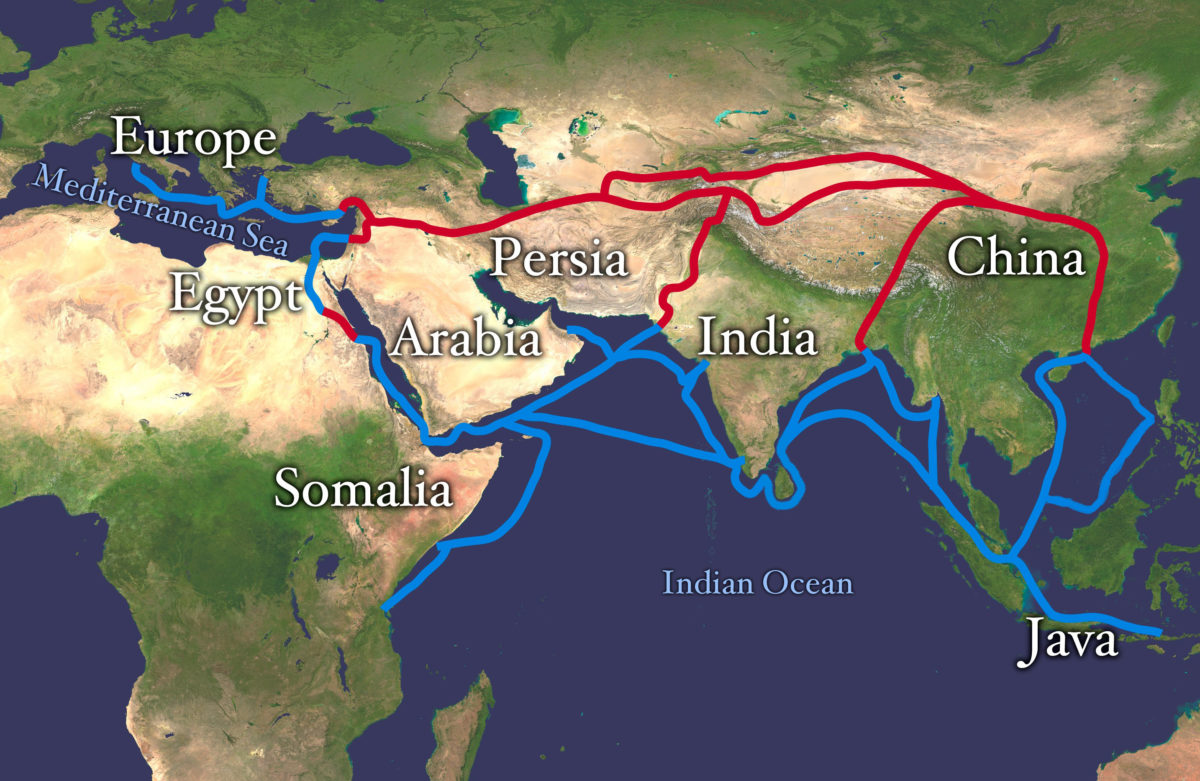
We’re in India, Kerala, Cochin, Fort Kochi. This region has been a prominent spice exporter since 3000 BCE; it is ancient. Kerala is the “spice garden of India” and was an important trading location on Silk Road.  For years, I’ve had an interest in maps and the ancient spice trade, so I was very excited to learn I’d be coming to one of the historical landmarks and origination points. Unfortunately, we weren’t able to find any “tours” so to speak that explained the spice trade’s history. At least I can taste the spices in person as I eat throughout the city!
By Whole_world_-_land_and_oceans_12000.jpg: NASA/Goddard Space Flight Centerderivative work:Splettederivative work:Bongan - Whole_world_-_land_and_oceans_12000.jpgSilk_route.jpg, Public Domain, https://commons.wikimedia.org/w/index.php?curid=35995542
We are staying in the southeast of India and are the blue point on the coast.

Kerela, as a state in India, is one of the country’s most well educated, healthiest, religiously diverse places with some of the highest gender equality ratings to boot. There’s far less poverty here than in the rest of India, so the stereotypes that I’ve heard about begging has hardly rang true. Truth be told, it’s so similar to some parts of Southeast Asia it’s like we’ve just moved sideways, but definitely not into an entirely new dimension. Most people speak English and it’s often far better we’ve experienced in Southeast Asia. There are even two bookstores here where I’ve purchased inexpensive classical English literature short novels, The Land that Time Forgot and The Old Man and the Sea. Tis good to read real books again!
Lunch on a palm leaf

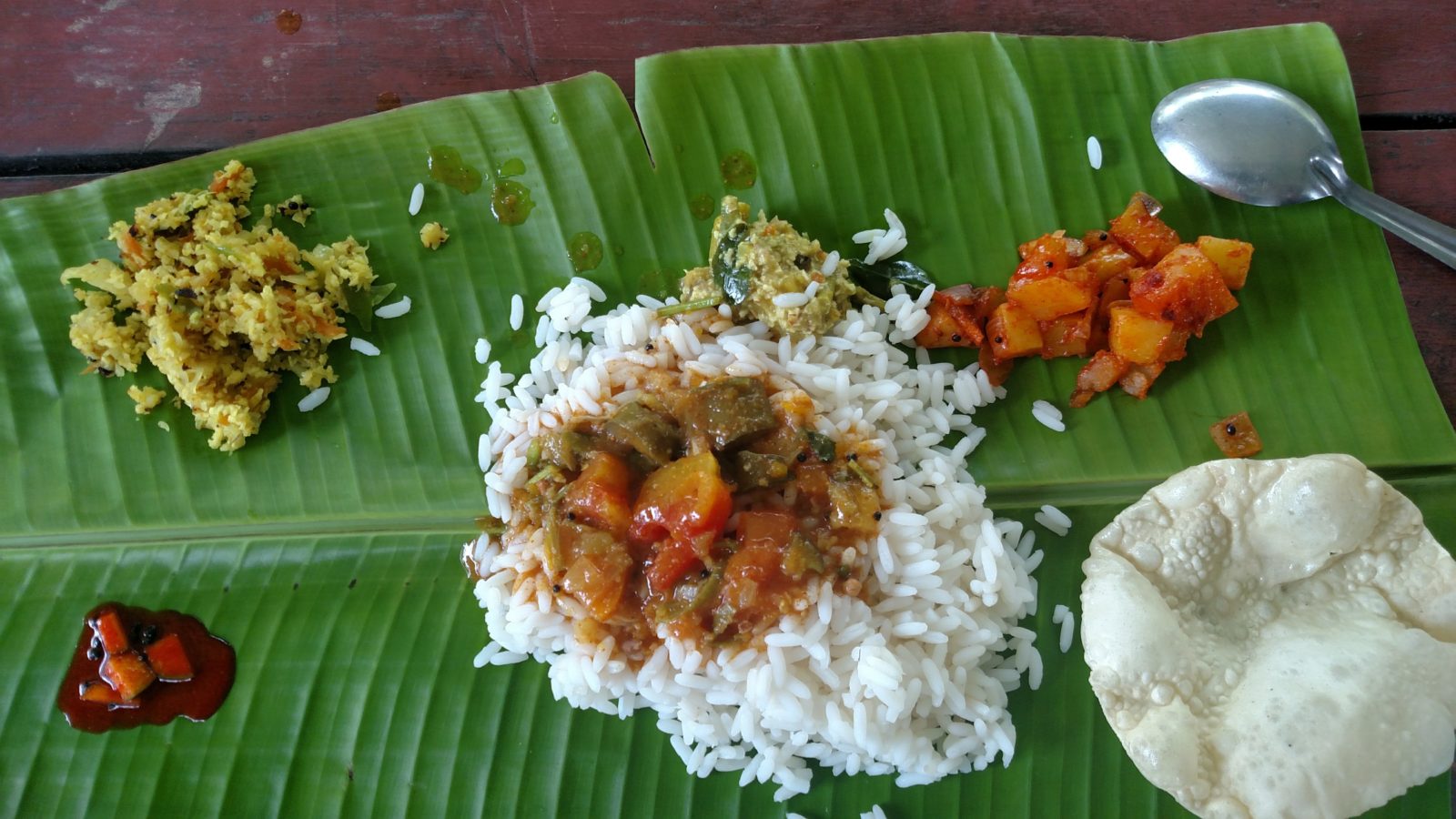
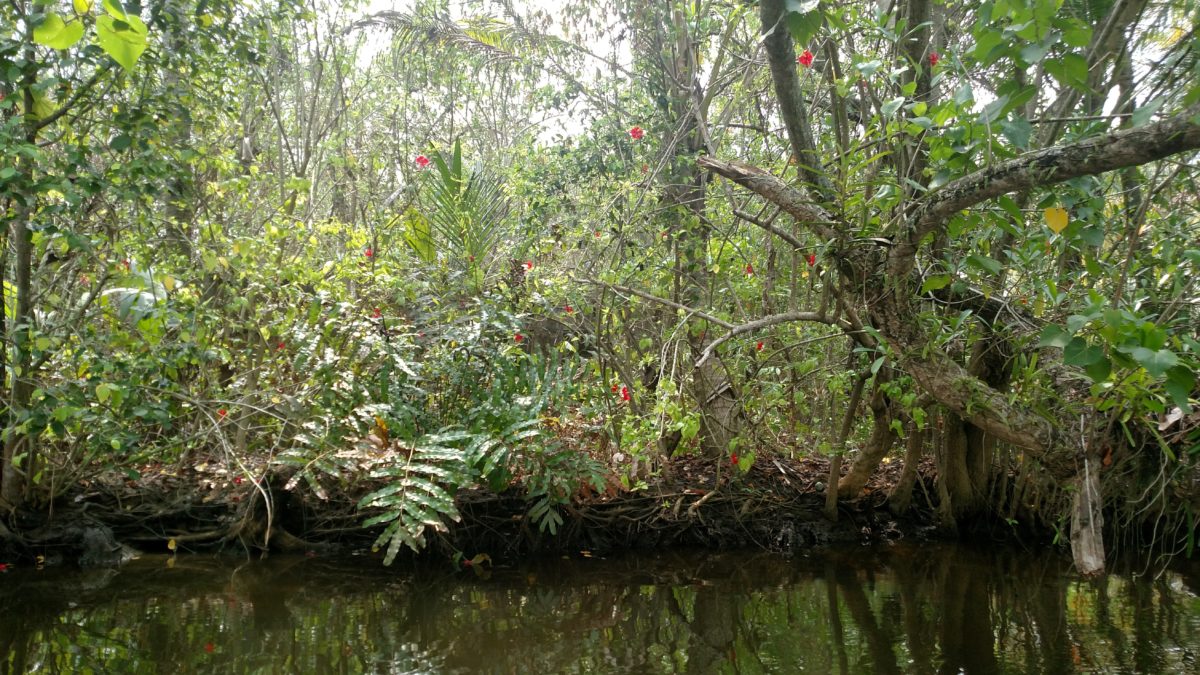
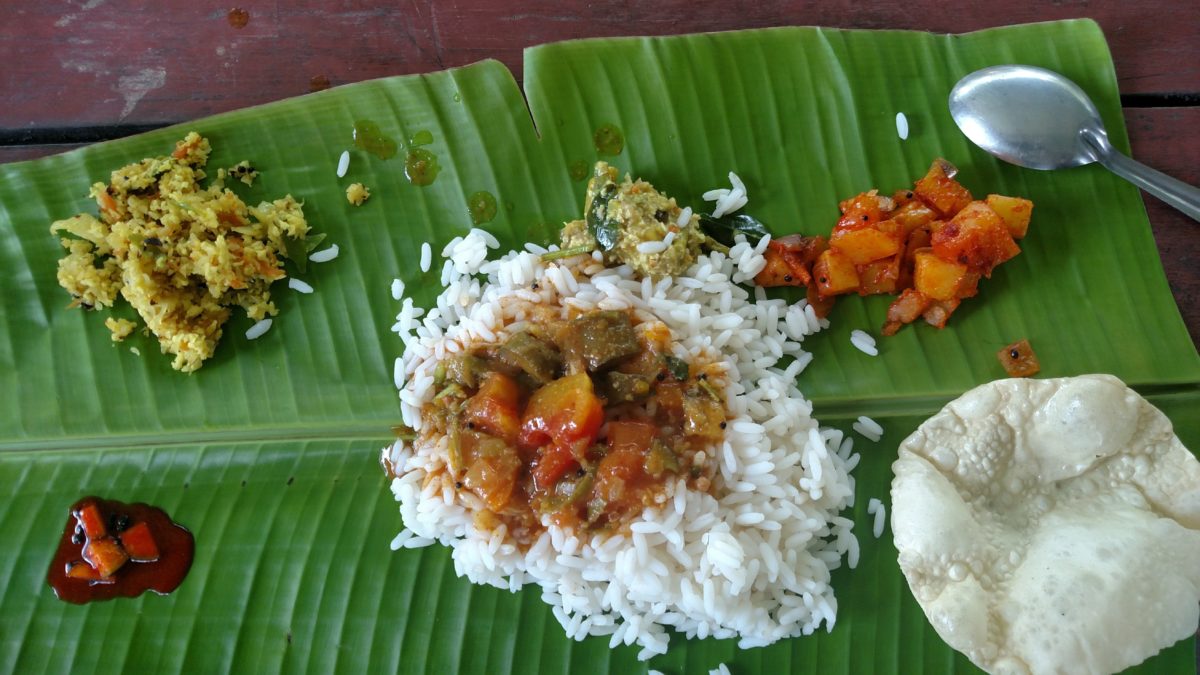
There’s not too much to do here in Kerala, but that’s OK by me. Earlier this week we did a Backwater non-mechanised boat tour, where we snaked through small canals and struggled against the winds on open waters with just bamboo sticks to move the boat downstream. Along the way we visited a traditional village where we had our lunches served on palm leaves. The food was some of the best I’ve had thus far! We also visited a small scale calcium carbonate processing “factory”, run by just a few men covered who were covered in white powder from their work, where they take spent oyster shells and naturally turn them into calcium oxide and hydroxide. In another location we witnessed how rope making is done through soaking coconut husks and then twisting the dried fiber together. The ropes are very strong and used throughout India. The best part of the day, however, was meeting fellow travelers. We had so many great conversations with interesting people and it really did refresh my spirit. One of the couples even invited Jason and I out for beers that night, which I obliged and enjoyed a beautiful sunset paired with even deeper conversation.
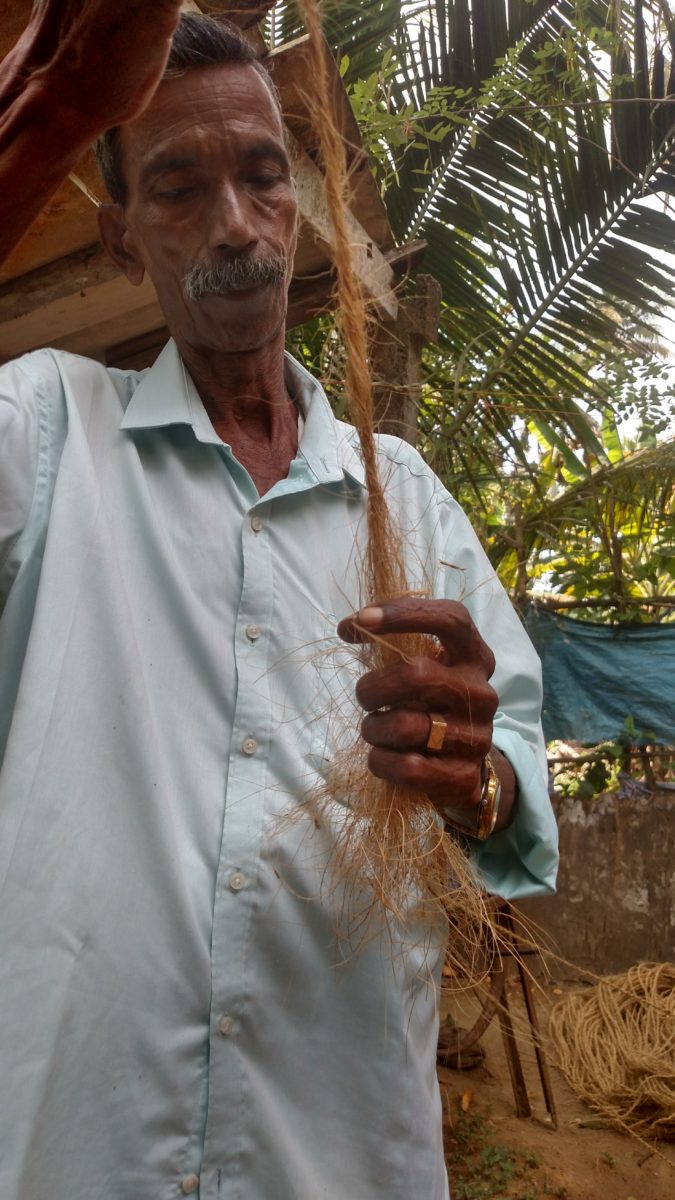
Rope making demonstration

Yesterday, after Jason told me he wouldn’t be eating lunch, I ventured out to seek sustenance. I have to eat twice a day… it’s just the way I am. Or at least snack a few times! Regardless, I stumbled into this place called, “Upstairs Italian Restaurant”, even though I was eating at the ground floor cafe. I ordered a chai masala tea and a masala omelet and began reading my book. A man came in holding framed pictures and started asking me what I thought of them. At first dismissive, being a woman alone in India, I eventually started chatting with him after he asked the easy question of, “Where are you from?” Turns out, he’s been all over the world and lived in LA for a few years, working at a Sheraton Hotel as a chef. He’d also cooked in Rome for several years, which translated into his love of Italian foods and thus his speciality restaurant. He said every September and October he shuts down and travels. He’s interested in going to Mongolia next, or studying pastry making in England. After nearly three hours of conversation I realized I needed to head back to the homestay to get ready for the dance!
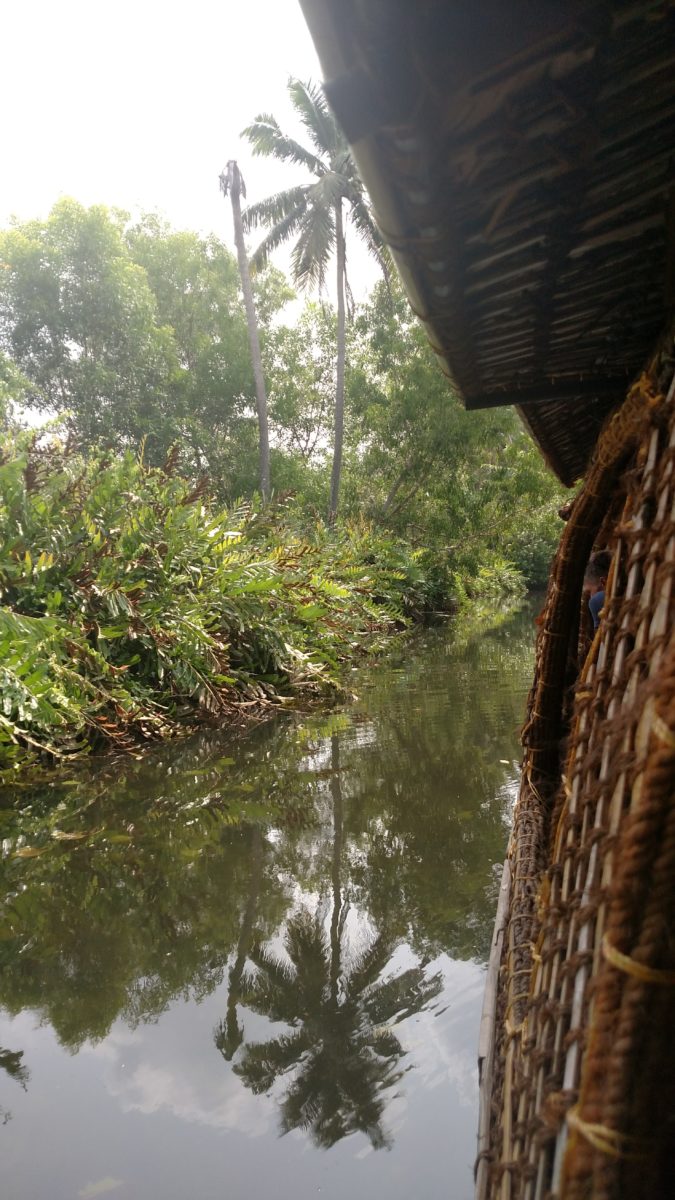
More backwater views

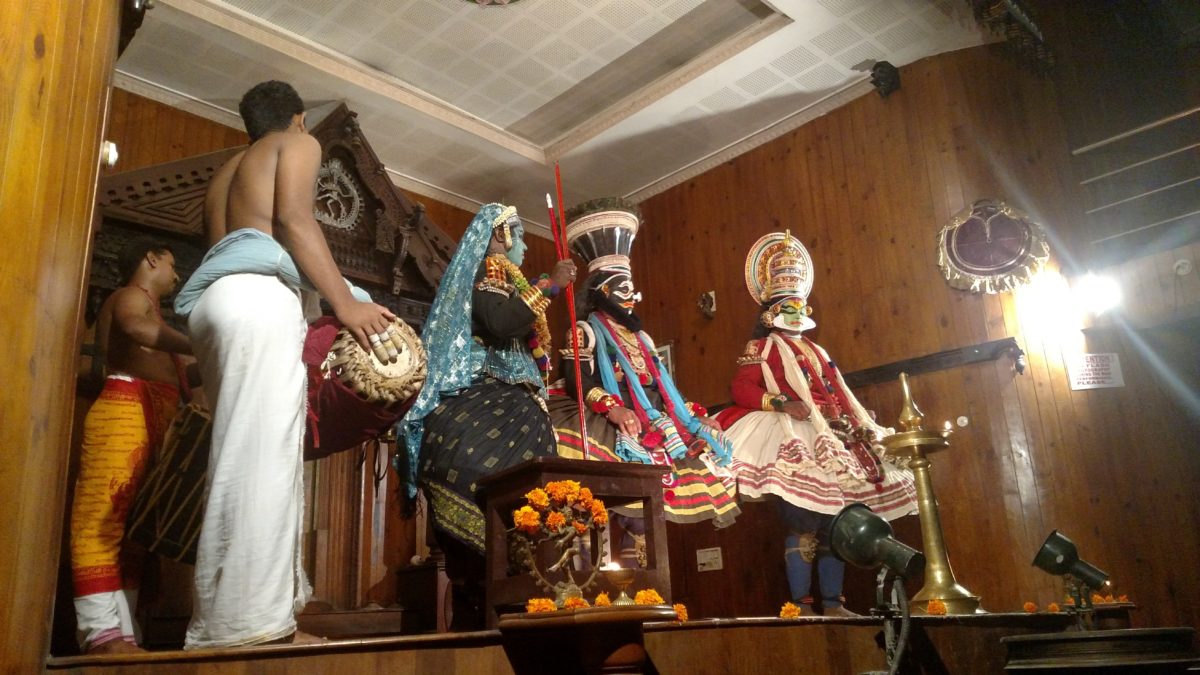
Traditional dance seems to exist all over the world and we’re lucky to have witnessed two dances thus far on the trip. First, we watched a Balinese dance that enchanted and in some ways spooked you with their rapid eye movements, intense makeup and costuming, and jutting arms. Here in Kochi, it’s much the same. Both dances come from a Hindu tradition, so they share many similarities. There are no words spoken during these performances, only music. During the Kochi performance one of the actors was permitted a tiny meep-like noise that made me nearly squeal with excitement every time he did it. It’s a performance art that I doubt I’ll see anywhere else.
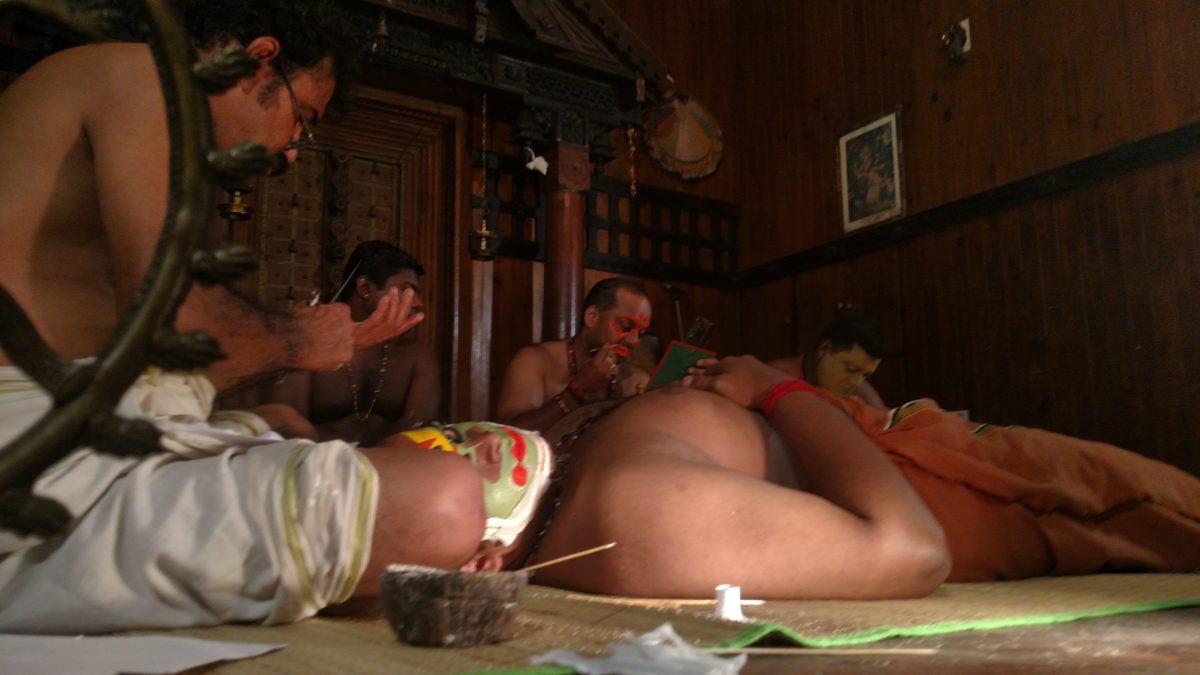
Makeup application before the show
Shot of the play

On Friday, we head to Mumbia, formerly known as Bombay (India is taking the name back over as Bombay was a British term). It’s a city with 20.7 million people. It won’t be the most densely populated city we’ve visited as that honor squarely goes to Tokyo with 37.8 million people. Delhi is a solid second with 24.9 million, but we won’t be heading there. Mumbai is going to be starkly different than quite, quaint Kochi. I still have doubts that I’m going to enjoy it there, but it’ll only be for four days and then we head to Greece!
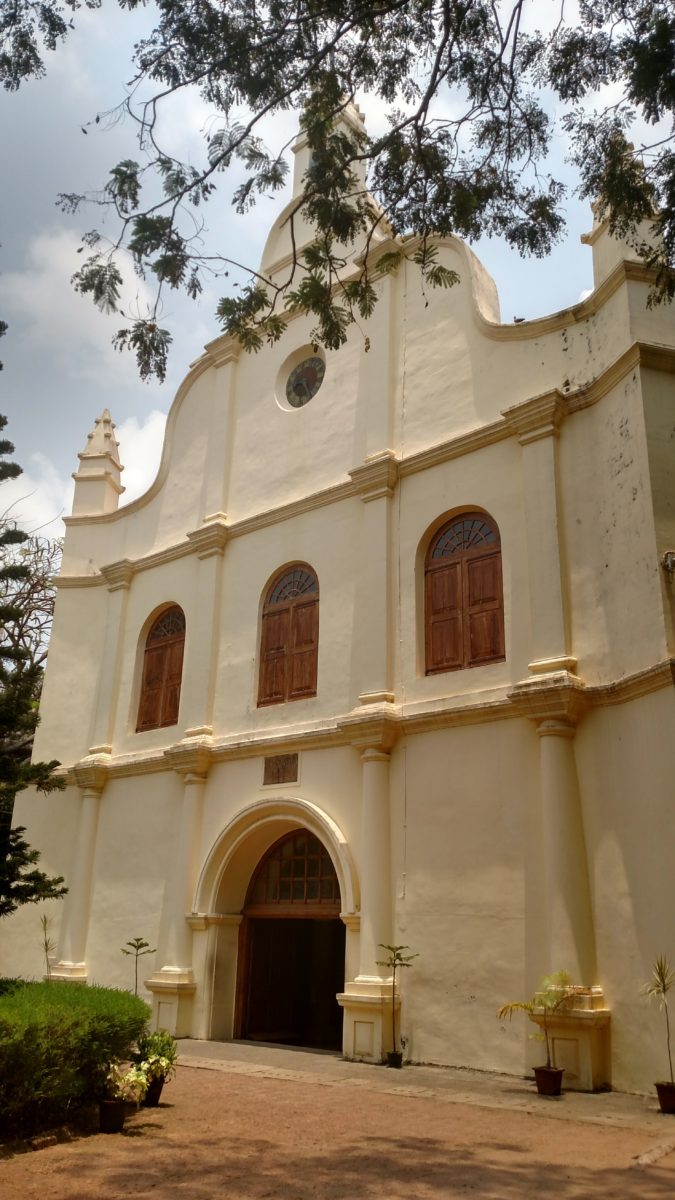
Oldest European church in India

The Rising Sun Has Set: Departing Japan


For those following along at home, here are some stats about our journey. We’ve been traveling now for 23 days and thus far we’ve had:

  • 7 Accommodation locations
  • 5 Cities visited
  • 5 Flights
  • 5 Museum visits
  • 3 Countries visited (not counting China since we just had a layover there)
  • 2 UNESCO World Heritage Sites visited
  • 2 Typhoons missed, but several days of rain
  • 2 Illnesses for Jen
  • 1 Checked bag, everything else has been carry on
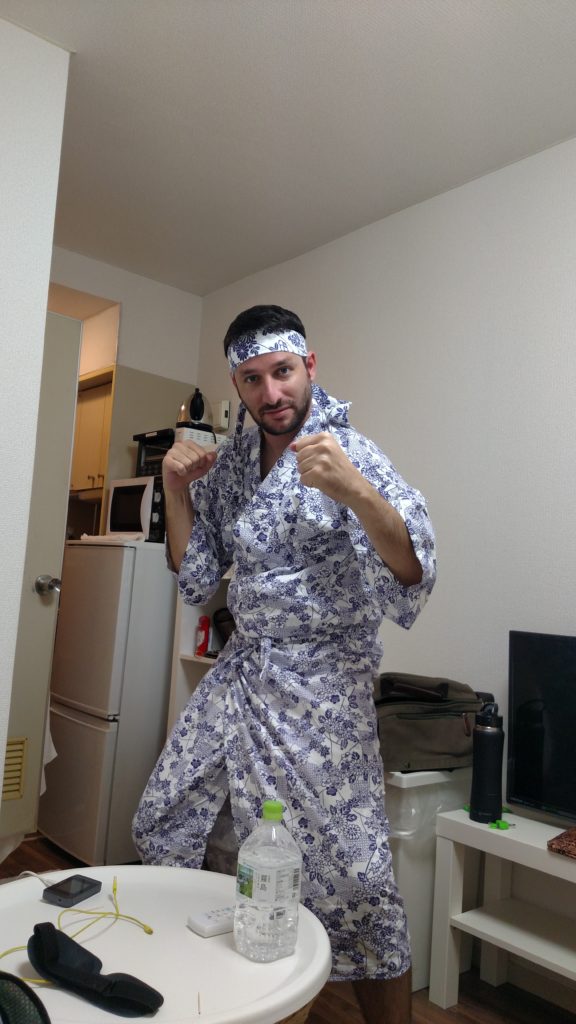
Hiiiiiiiiiiiyaaaaaaaaaa!!!

Travelling for the long term isn’t like going on a week long vacation. When you’re on a quick vacation you pack whatever you want, spend money like it’s no big thing, and generally just live it up hard seeing the sites, eating and drinking, and having fun. At least, I do! But, this long term travel requires a much more measured pace when possible and much more planning to save money along all available points while also trying to get the most out of every location you visit. Talk about balance!

Balance
Balance

Yesterday, we flew in from Japan after two weeks there. We visited three major cities, Tokyo, Osaka, and Kyoto. Each city has it’s own history and personality, along with pleasure and pain points. Getting to Tokyo itself was a bit of a struggle. Our flight was delayed by a few hours from Seoul and the train ride itself from Narita airport to Tokyo took 80 minutes. We had thought we’d arrive around 8:00 p.m., but it was nearly 11:00 p.m. when we got to the AirBnB. The directions we had weren’t “enter this address and walk there via Google maps”. It was a bit more complex than that. Thank goodness we printed out the four page picture directions our host provided!

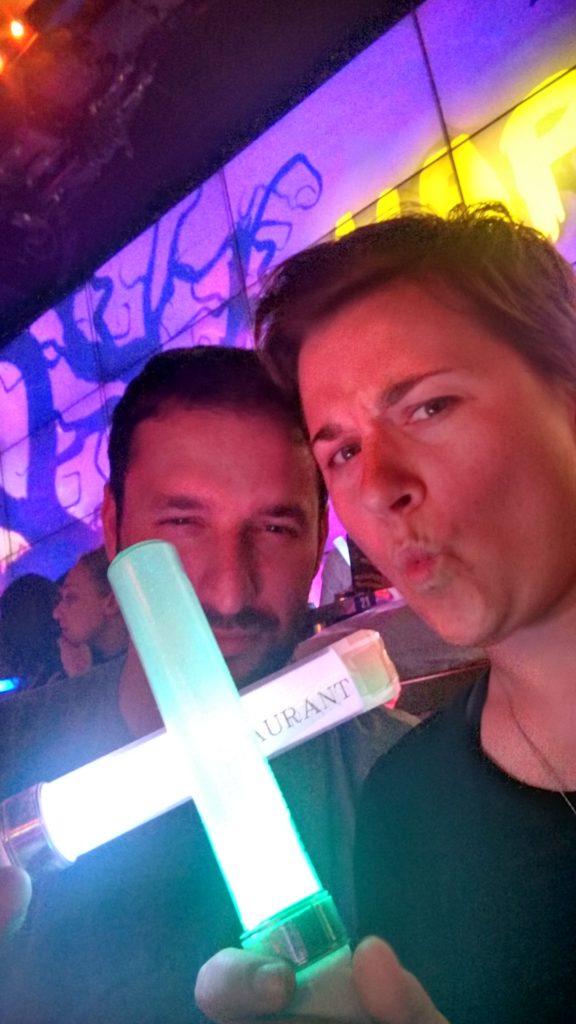
Jason and I at the Robot Show

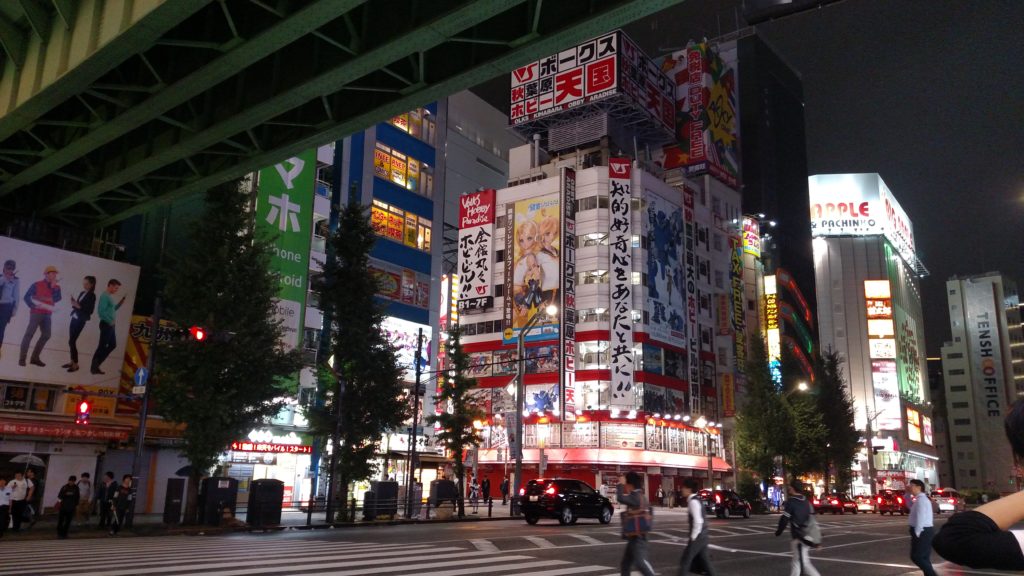
When we finally made it, dropped our stuff, decided we should eat, and headed out for the night it was nearly midnight. Outside, there was a construction crew still working on a tall building. We were staying in the busiest nightlight district in the city, Shinjuku, so that was quite a trip to see not only this entire neighborhood electric and drunk and bright as day at midnight on a Wednesday, but a construction crew soldering and hammering and working their butts off in the middle of the night. First Japanese culture shock.

My camera phone can't capture the madness
My camera phone can’t capture the madness

Tokyo itself was a bit much for Jason and I, we have to admit. While we’re so glad we went, it was like placing NYC on top of NYC and then in some places putting another NYC on top of that. Overwhelming is the right word, expensive is another good one, delicious works too, but crowded is probably most appropriate. Every shot I took that tried to capture the scope of people failed. 13.4 million people live in Tokyo and over 19 million tourists visit Japan each year, many going to the capital to see the craziness of Tokyo themselves.

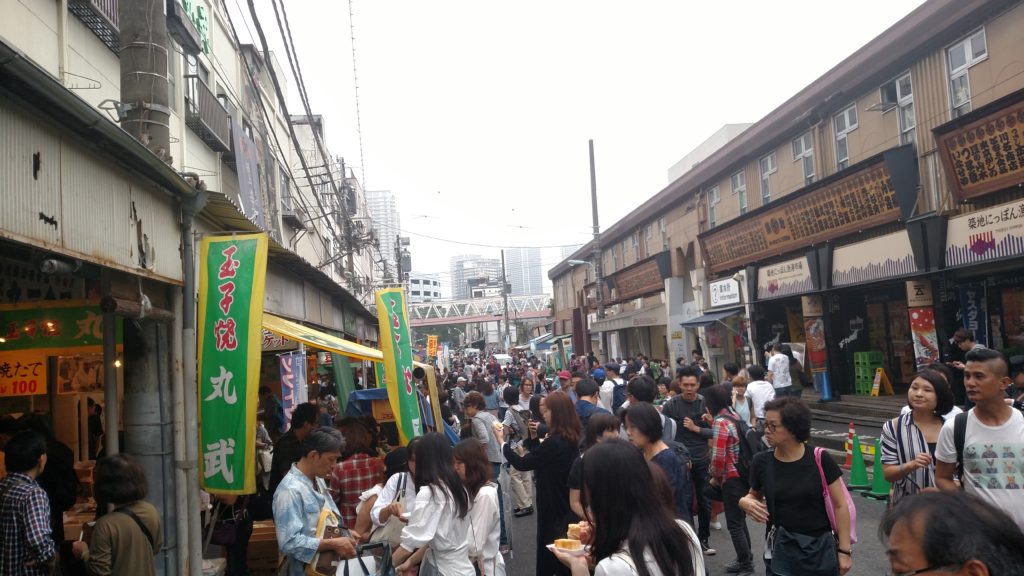
Crowds at the fish market

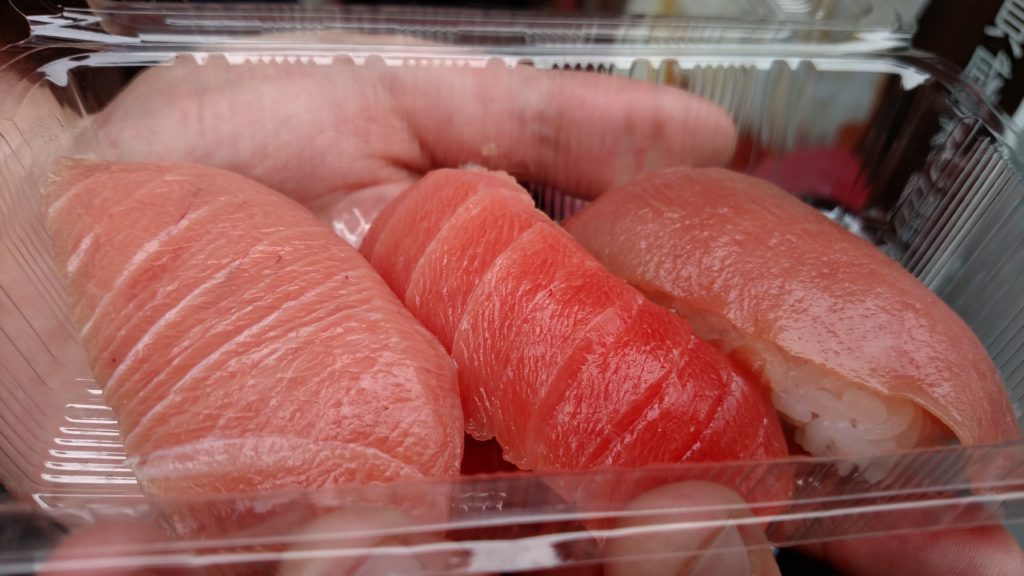
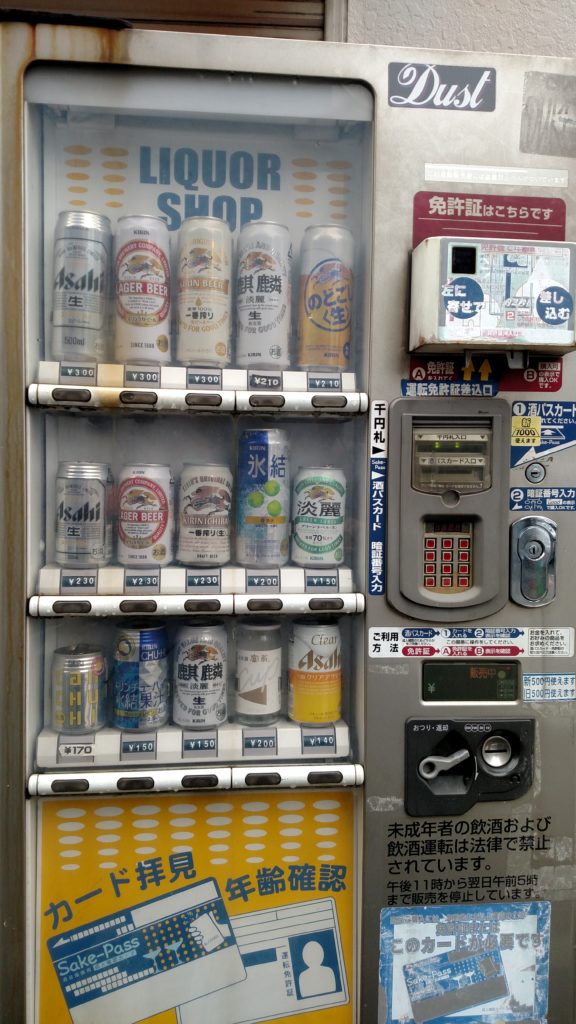
Overwhelming, but well worth it. Going to the world famous fish market, navigating the swarms, trying free samples of who knows what, and getting a big platter of the best sushi we could find was a memory we won’t soon forget. Neither is eating lean to mid to fatty tuna from a street vendor for a few dollars that melted in your mouth and required not a drop of wasabi or soy. Heaven. Getting a vending machine beer was a hit too! Bowls upon bowls of ramen will keep swimming in our minds for months to come. I hadn’t eaten much ramen before. Everyone’s had their share of Cup Noodles in the leaner times, but true Japanese style fresh ramen is different and something I began to crave after a while. One of the chain restaurants has a sign that says, “Try three times then you’re addicted!” and, they’re right! By the end I could have eaten ramen every day and will probably carry that love with me for a long time coming.

Tuna, from lean to fatty

Navigating Tokyo is an art. It takes practice. They have ticket attendants at automated machines that help poor tourists such as ourselves find the right line and pay the proper fees. There are three organizations that operate lines in Tokyo, so it’s not one integrated subway system like we would have anywhere else. If you’re on the JR line you can’t just transfer to the IC line without getting off, going out, getting a new ticket, then going back in again. It’s a hassle. There are 158 transit lines in Tokyo and, according to Wikipedia, “40 million passengers use the rail system daily at 14.6 billion annually”. We stayed in Shinjuku, and again according to Wikipedia, ” Shinjuku Station is the busiest train station in the world by passenger throughput.” If you’re going to dive in, DIVE DEEP!

Beer vending machine

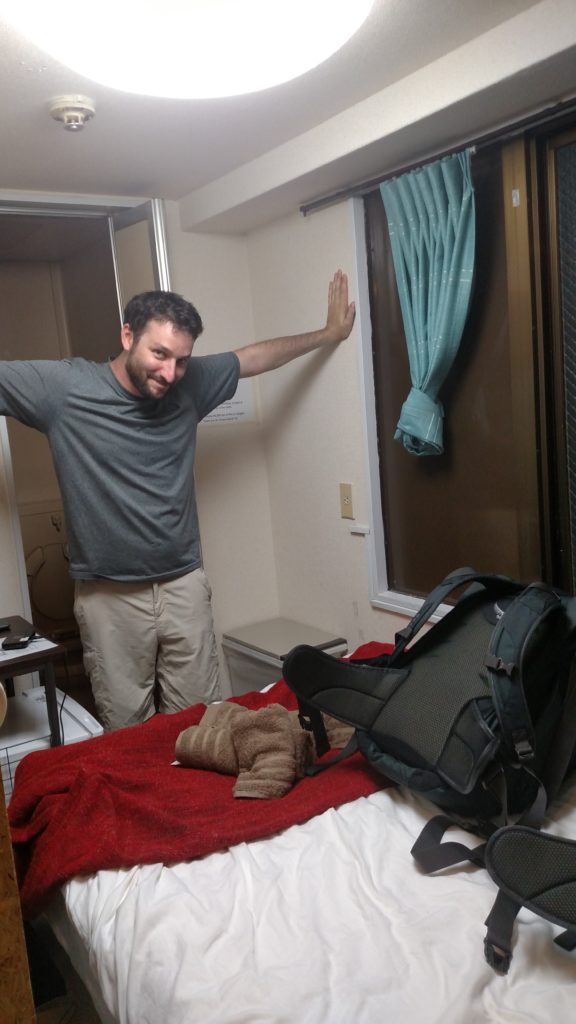
After a week in Tokyo we were ready to put some breaks on the madness and go to a calmer place, Kyoto. We jumped on the plane and headed first to Osaka, the second largest municipal city in Japan and still on the mainland. It was a 2 hour flight, nothing too crazy, and we fairly quickly made it to our AirBnB for the night. This place was hilariously small. Like, there was no floor space at all. The only floor space we had was in the bathroom and right at the entryway. The bed took up the entire room, and it was a double. People live here! People cook in these apartments and they have physical belongings and even raise children. They spend their lives in apartments that we’d call closets. Physical space constraints might be tight in NYC, but I can’t imagine they’re near what this was in Osaka. It was only one night, but it was illuminating to see how people there live.

Our room was this small!

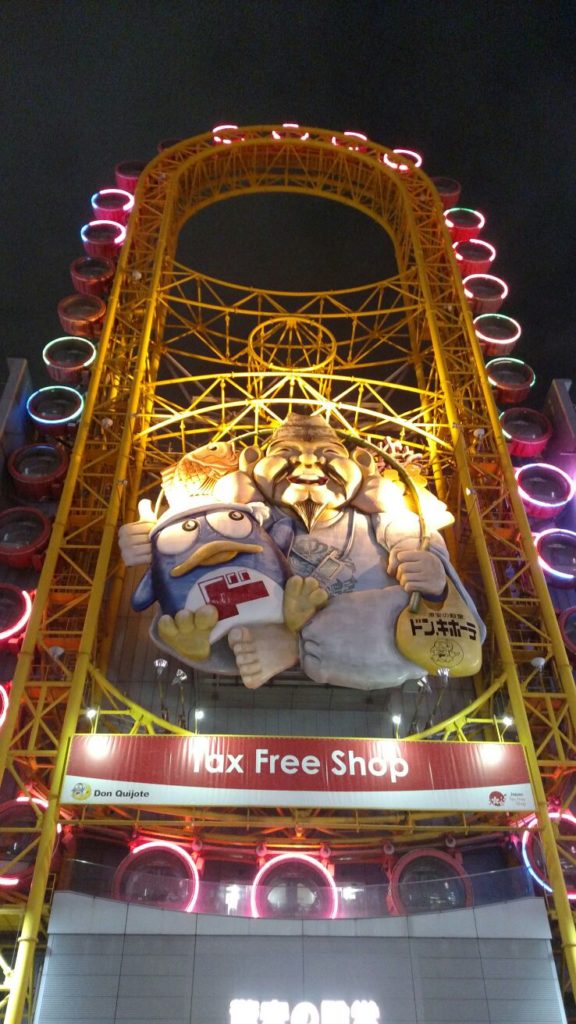
Osaka is fun, hip, and artsy. We had two nights in there, sandwiching our Kyoto trip, and on our second night we stayed in a capsule hotel in Little America. I don’t know if it was actually called that, or just embodied it with the pint sized Statue of Liberty on top of a tall building, rap music, and endless streets filled with American fashion and plethora of English, but it felt like Little America. Unfortunately, I was suffering from a bout of traveler’s diarrhea, something I am afraid is about to become far more common with me, and so I had a pretty shitty time, no pun actually needed.

img-20160929-wa0001
Dotonburi, Osaka

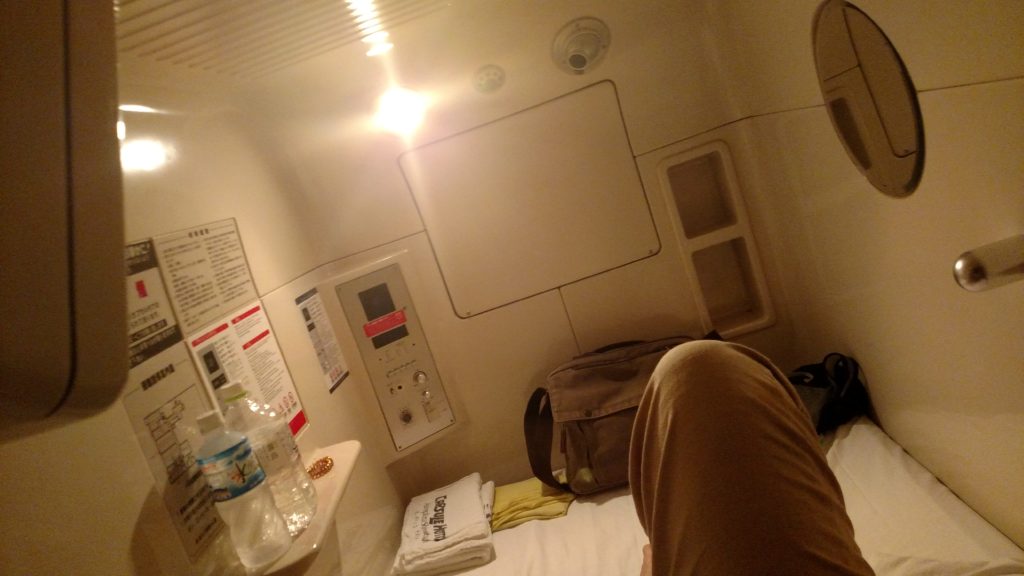
The capsule hotel was something I really wanted to check off our list. It’s this crazy concept where you sleep in shipping container sized room with people on all sides of you. It’s strictly in Asia, as far as I know, and I figured one night to see what all the hype is about should be fun. If I’d know I was going to be ill I’d have went for a real hotel, but you can’t predict the future. Regardless, it reminded me of staying in a hostel, only a little nicer actually. You had your own space and walls at least. In a hostel it’s bunks and curtains if you’re lucky. Much like a hostel, the women above me was loud and her alarm wouldn’t stop beeping at 5:30 in the morning. We were getting up at 7:00 so… not feeling well +  annoying person above + having to catch a train to a flight = bad night’s sleep. Almost two days later and I’m still not fully recovered, but feeling much better than before at least!

Ground control to Major Tom. In the capsule hotel (double waters for the belly) in my Japanese pj’s.

Last location update is for Kyoto, the culture capital of Japan. Kyoto is temple town. There are 1,600 + temples in the city, in fact. Kyoto is shrines on every corner. It’s bamboo forests and endless orange gates. It’s hip and artsy, but not as stuck up as Tokyo. It’s peaceful while still being rather touristy. Our AirBnB in Kyoto was one of my favorites. We had sleeping mats instead of a bed, so every night we pulled down the mats and put them back in the morning to open the room up. There were no chairs in the apartment, just floor cushions that you put on legless chair seats so you could sit back. We had a kitchen, which we used to make PBJ for breakfast most of the week, and free coffee and tea, which helped us save money. There was no burner, so we couldn’t cook, but we didn’t expect to. The shower was big enough to have a curtain! What voodoo! The room felt homey and the city, the former capital of Japan (To-Kyo, Kyo-To), was lush with green.

img_20161002_180550785
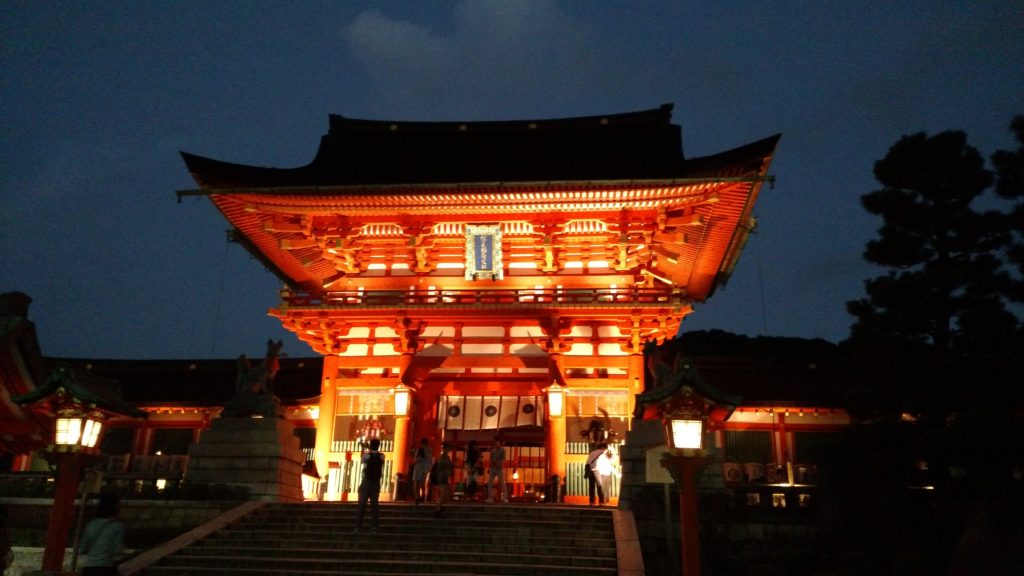
Fushimi Inari Taisha first temple lite up at night
img_20161002_161631821
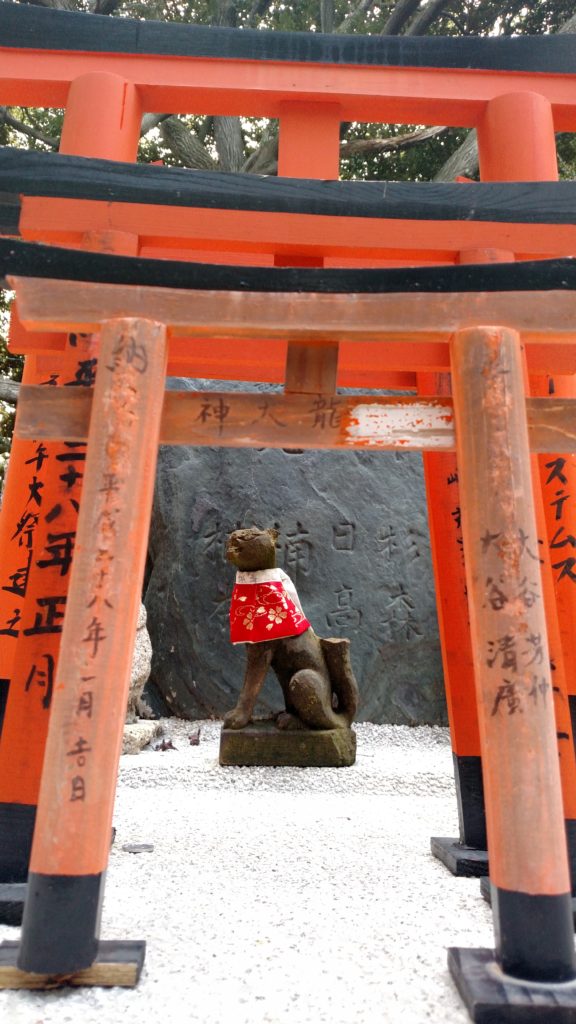
Foxy!

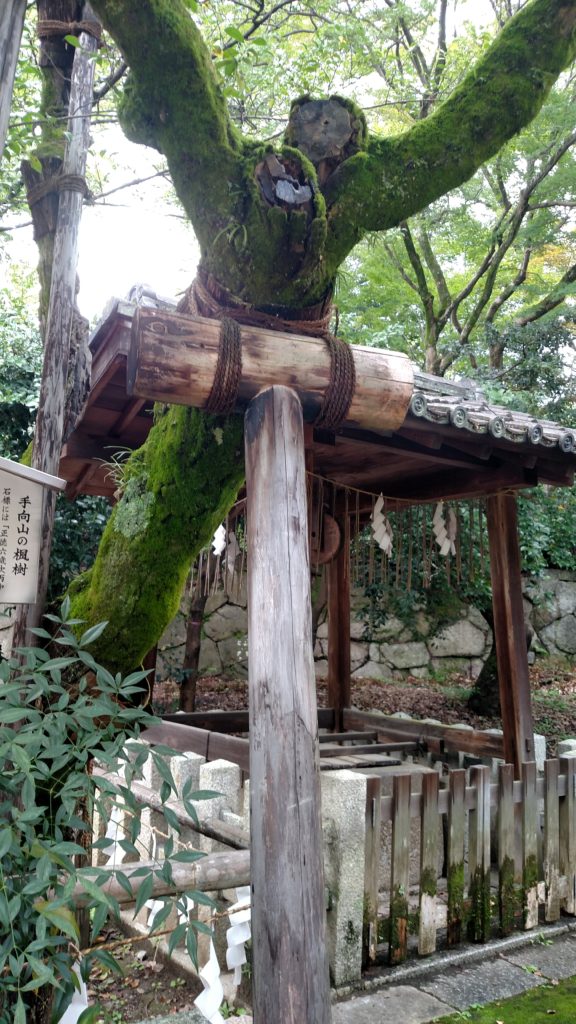
We loved Fushimi Inari-taisha, the golden orange arch walk way leading up a mountain to a city vista. Once you get past the hoard of visitors in the beginning it’s quiet and less crowded and full of kitties! Many kitties live on the mountain, a happy surprise. Keeping with the animal theme this particular area has dozens of fox sculptures, who are regarded as messengers. Foxes holding scrolls and keys are found throughout the shrine and look mischiefly adorable.

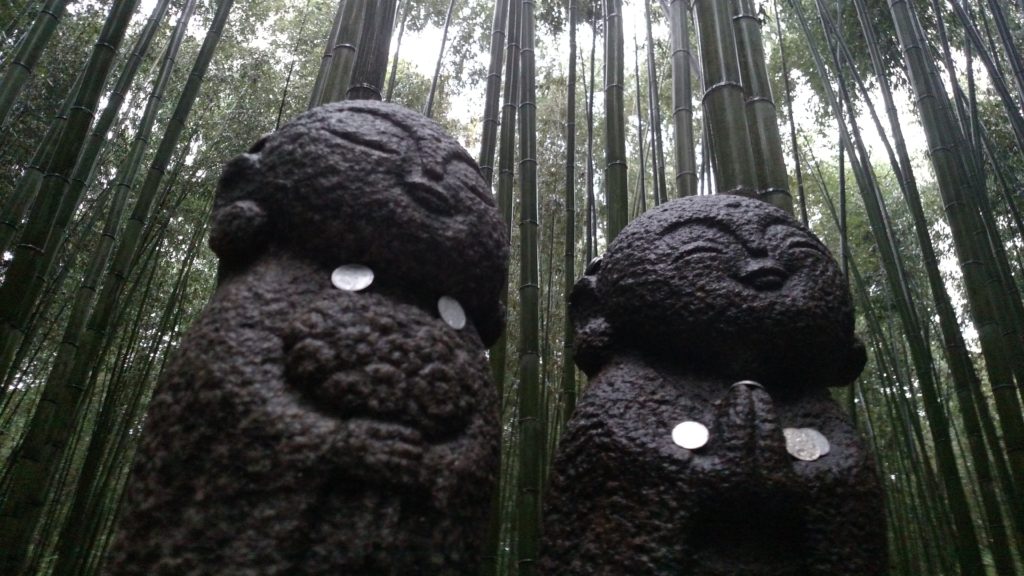
Adorable little buddahs!

One our last full day we went to the bamboo forest Arashiyama for a rainy walk amongst the tall, green stalks. I was feeling poorly so it was very difficult to get me motivated to move, but I’m glad we went. The sunset alone was worth the effort. If we’d arrived earlier we’d have done more, but the thing about long term travel is you do what you can, when you can, and you don’t push yourself to the limit because you are always moving and you need to preserve yourself while doing the best you can to do  it all.

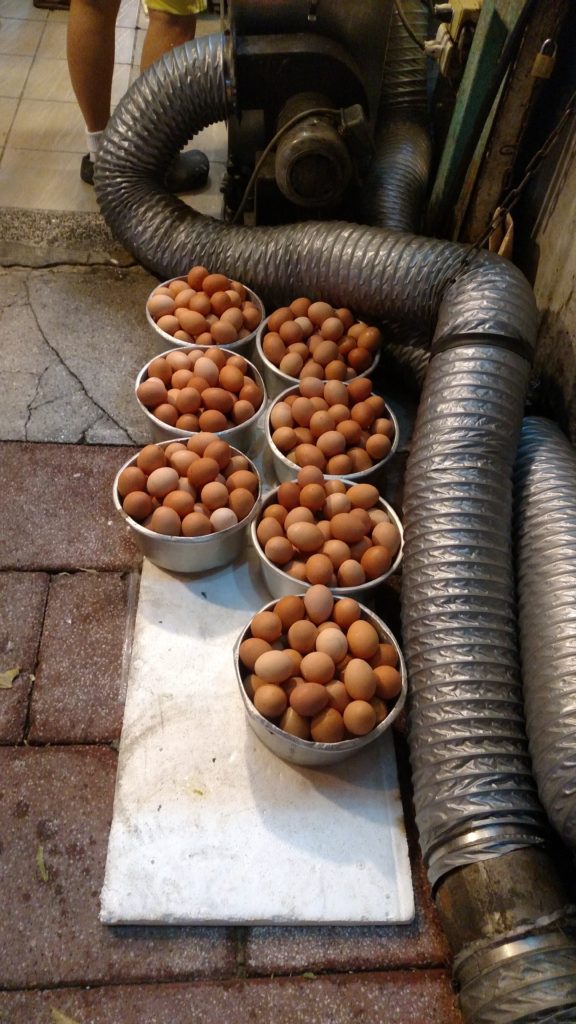
Eggs in the streets!

Today, we’re in Taiwan, a place I was feeling enamored with prior to our arrival and now am striking less so. It’s dirty. I know I’m going to see dirtier places soon, but this is the dirtiest place I’ve ever been. Last night we went to a market that smelled of very fresh sewage. Mix that with garlic, fish, and general rubbage and that’s been Taipei so far. I’m very nose sensitive, plus stomach is still crampy, so it’s taking some getting used to. I’m positive we’re going to find the bright side of this island. We’ll discover the places I know exist from my studies. But, for today, we’re resting up, getting my stomach back in order, and doing laundry (something else you do on long term trips!). Then, later on, we’ll hit another night market and wish for the best!

Sayounara for now, my friends!

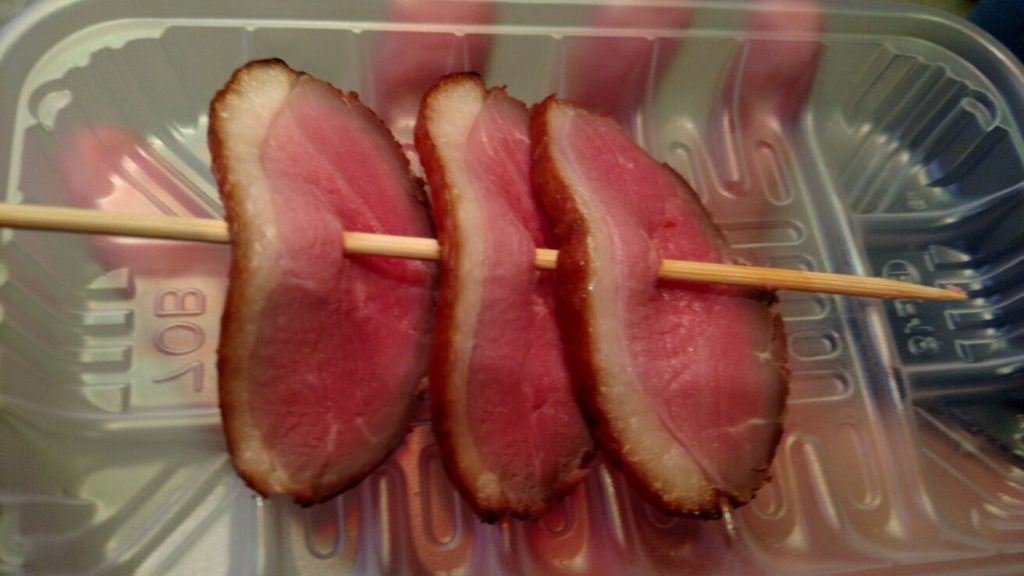
Smoked duck. Mouth melting!


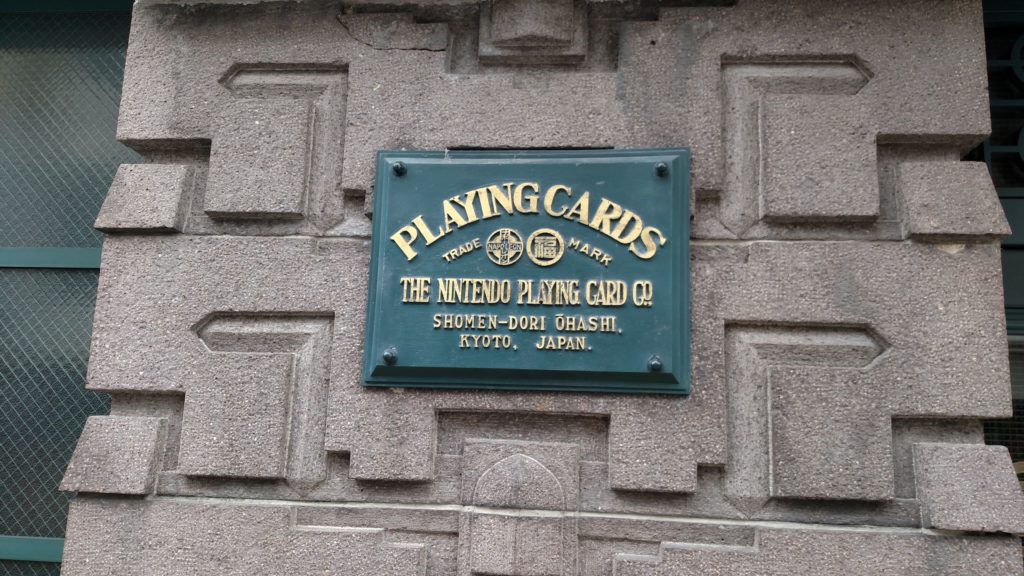
Did you know, Nintendo wa founded in and still operates in Kyoto. It's over 100 years old.
Did you know, Nintendo wa founded in and still operates in Kyoto. It’s over 100 years old.