I wrote this in August, 2016. It’s June, 2017. I’m publishing it now because of a desire for openness and sharing. There’s no shame in my hopes and dreams. Here they are from last year.
For years, I’ve subscribed to the belief of a “gratitude attitude”. What that means to me is that I try to reflect as often as possible on how grateful I am for all of the blessings, good fortune, privileges, and goodness this world has provided to me. I do my best to be grateful during the difficult times and see why I’m fortunate even if things aren’t going my way. I’m in no way perfect and very often get grumpy over the dumbest stuff. Still, I try to reflect on goodness as often as I can, because I know it’s a main component to my happiness.
I miss my bubba boy.
It’s moving week. Hampden has been my neighborhood for three years. I love it here. I’m happy here. I’m even recognized around town by a few people! But, it’s time to move on. The trip is three weeks away to the day. So soon. I’m cleaning the apartment, putting my life in boxes (like I’ve done every single year for the past decade), and canceling the subscriptions. In the past year, in this particular apartment, I had the chance to live alone for the first time and it was glorious! Sleep all over the bed. Build a pillow hammock for one. Skip the dishes till you’re ready to have them done. Keep it as neat and tidy as you like it. Yep, that’s the good life.
Flowers I gathered during another transitionary period in my life in Olympia, Washington in 2011.
Starting Saturday, I’ll be staying with my mom for a few weeks and then we’ll be sleeping in the strangest of places. This morning, I woke up at 5:30 and decided I wanted to nap for a bit on the couch as the sun rose. I was so grateful to sleep on that luxurious couch. I crawled back in bed before Jason noticed I was gone, but it’s moments like that where I’m reminded to be mindful of how short time is and how you have to simultaneously hold tight while keeping your grip loose enough to let go. I’ve held tight before. I’ve gripped onto days and seconds as they escaped with no way to make them stop and stay. It’s a common tale and I’m no different than anyone else afraid of loss. Going through hard times doesn’t mean you are better able handle them later, it means you know it’s going to be tough and you just have to deal with it.
Reflections from the happy life I left behind me.
Many are jealous of the trip, few are leveling with me like they would if they really sunk into my shoes. Picture this… Drop everything, for an entire year of your life, and go away to places you’ve never been (and, up until a few months ago might not have even known existed). Leave your family, friends, and city behind. Don’t work. Don’t make money. Spend money. Struggle. Know you’re going to fight through language barriers and with customs agents. Know there are things in these places will make you physically ill. Risk. Fight. Over directions and because of loneliness. Worry. Wonder what’s happening at home. Feel like you’re missing out on things big and small. Wish you could share the journey with more of those you love. Know that phone calls don’t replace hugs. Try not to envision if the worst happened, but envision it anyway. Be afraid and grieve. For you’re letting so much go and you have no idea what happens on the other side.
I did it! And, I survived. Pictures from the world over. Germany, Budapest, Athens, Vietnam, Thailand, and I think Hong Kong
Am I grateful to go: of course! I’m so humbled to be able to take this on. I’m so honored to be part of something that will open up a whole new world and hopefully deepen my relationship to Jason and humanity itself. I’m going to be challenged every single day in ways that I could never be in my comfortable life at home. When I was younger and went to Indiana I was nervous, but knew farming was what I was called to do. Now, I’m older and more settled down. A dozen times people have said, “Good for you for doing this when you’re young”. I’m 32 in two months, I’m not young; but I’m childless, unmarried, and without a house, so therefore I’m not tied down.
This is a collection of some of the pictures I took for other people in the first month of my trip. It’s incomplete. Pictures for: Chris, Aubrey, Daniel Klein, my mom, Maryland, and everyone for Halloween 🙂
Sometimes, my gratitude is almost a blinder, because it helps me be contented in the moment to the point that I don’t seek as deeply or strive for a new life. It’s easy to be complacent and content. Change is difficult.
I’ve been listening to a great many travel songs today as I pack. I and Love and You really spoke to me:
One foot in and one foot back. But it don’t pay to live like that. So I cut the ties and I jumped the tracks. For never to return.
I’ll be back, but I’ll be different and so will you. For never to return to this moment. But, I plan on forever being grateful for the opportunity to live and those whom I love so much.
Money is a dirty word. We really hate talking about it in the US. It’s so personal and completely uncouth. Because of that this post may be distasteful, intriguing, TMI, or even feel like bragging to you. My point in writing it is that we’re asked this question often and I know it was one of those things people tiptoed around in the US before we left. People say, “Wait, you don’t have a job and yet you’re traveling… for nearly a whole year?!” Yep, I agree, that’s kind of absurd. I didn’t think it was possible either, but I’d like to walk you through how we’re doing it.
First off, we’re not crazy rich or trust fund babies. Most of you know this, but it’s worth saying that, while we come from middle and upper middle class households, we were working professionals making our own way up until we left. We lived in a modest apartment in Baltimore City, together paying $850 for rent monthly, along with utility costs that added another $100 or so to the base cost of living. Add in other bills, and the general cost of having a young professional’s lifestyle, like drinking out, going for coffee, or eating a decent restaurants, we were spending quite a bit of money each month just existing (in a volume that’s greater than I care to think about). Neither Jason nor I are much into “things”. We aren’t much for buying stuff at least and prefer foods and experiences over the appeal of a new gadget. Because of this, and limited carrying capacity, we have a serious lack of souvenirs.
Can’t buy all the things, sadly.
Despite not being trustafarians, we did have well paying jobs that allowed us to save up during our planning process. Salary talk is again considered ill, but we made good money and held middle management positions in our companies. Being childless is also key here, because if we had a kiddo we’d have surely invested our cash into that little life.
A few months after Jason and I met he told me it was his dream to travel the world. It was not my dream. My dreams had been fairly well taken care of. When I was 27, I took my gap year to farm, then came back to work for a company that I thought was doing well for the world in a position that I enjoyed (almost) every day. My family and friends were close by. I lived in a city that I was invested in from a personal and professional standpoint. Plus, I had a habit of travelling a few times each year anyway, more than the average American does. I enjoy exploring various parts of America. Jason, on the other hand, needed to go beyond the sea to shining sea and see what life was like somewhere else. I didn’t even have a valid passport when we met. I wanted a dog.
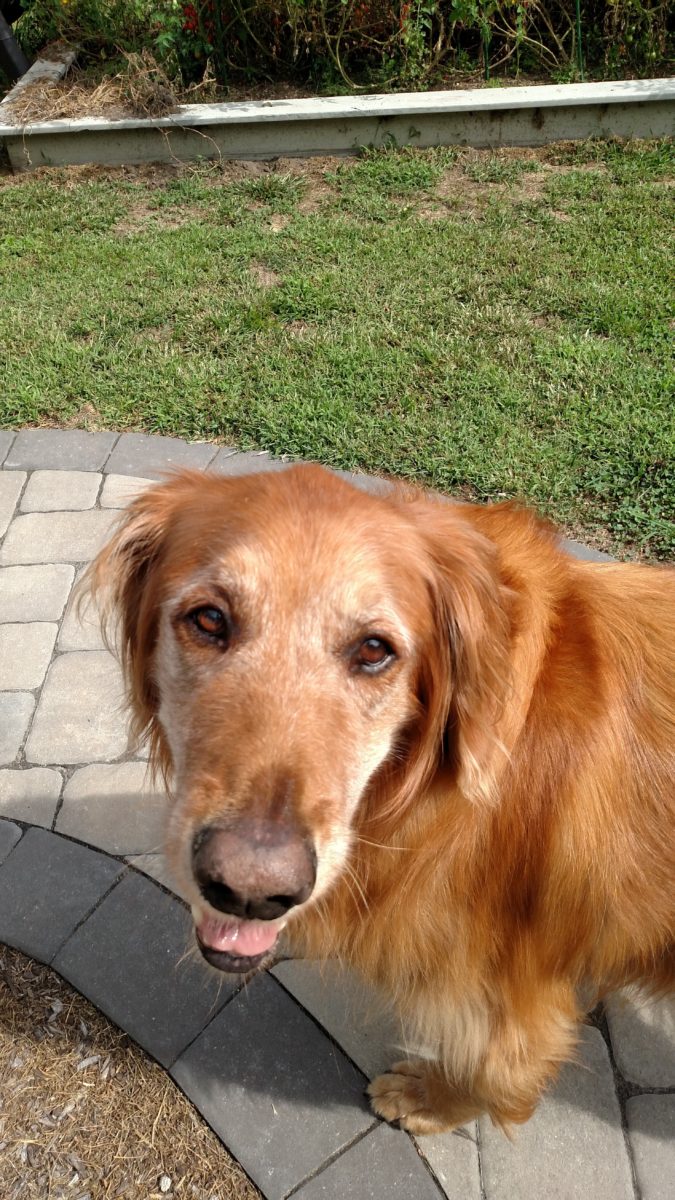
Woof!
During the course of our relationship my dad got sick and eventually passed away. He left us in June of 2015. He was my top priority when he was alive. After we lost him I could start to entertain the idea of long term travel. We began discussing the idea more in depth. We had several emotional talks over our priorities as a couple and what the future held. I eventually said, “Yes” to a dream that I still felt was his, but was beginning to become mine. We started saving and planning.
In 2016, we really hit the ground running with our plans. Discussions surrounded routes, timelines, overall goals, health and insurance, backup plans, keep in touch with the people at home, equipment, and most important to the trip’s success: budget. We decided we’d like to spend $30,000 in total between us, all in. That figure meant we’d not drain our savings, nor will we have to put anything on the credit card, and we should still be able to see and do a decent chunk of what we wanted.
We knew from the get-go this was a budget travel trip, not luxury. No resorts, no crazy sightseeing tours, no overpriced excursions, no scuba certifications; nothing that would break the bank. This means we’re missing out on activities a casual, short term traveller would partake in where spending isn’t a concern, but if we didn’t skip some of that we would never be able to adhere to our budget. We also originally thought we’d only be gone nine months, but due to the crazy Affordable Care Act exemption requirements we had to extend to 11 to ensure we don’t get fined over $1,000 each for not having insurance for the past year. We did not increase our budget. Make that 30K stretch!
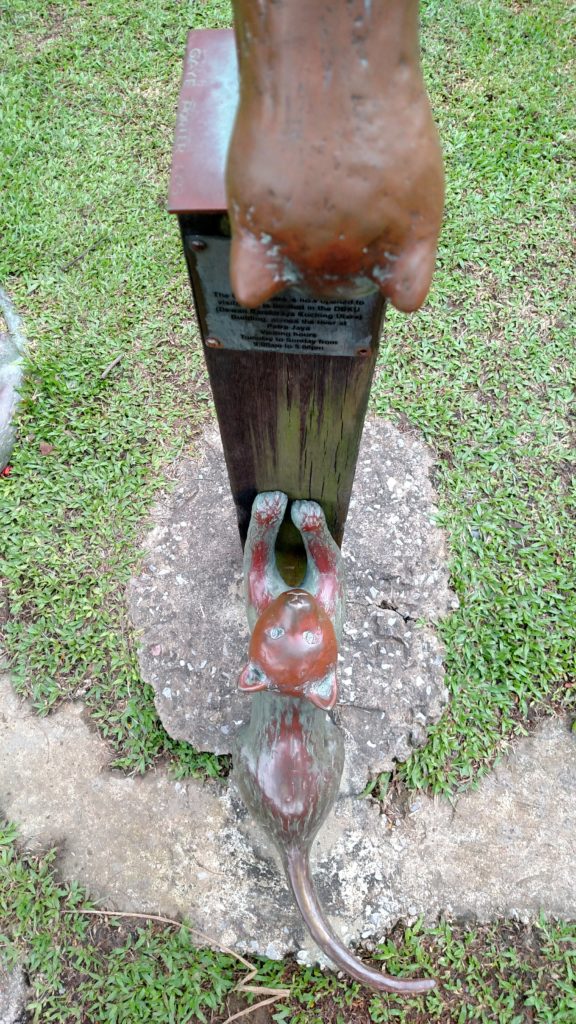
Kitty stretch in Kuching
It’s worth noting that prior to the trip, even though Jason and I lived together, we did not share finances. I’ve never shared my finances with a partner and rather liked it that way! I very fortunately had made enough that I didn’t have to. In the beginning, our lack of prior experience together in this area meant there was some fierce bickering about how money should be spent. I have a YOLO streak and that makes me more of a spender. Jason is far more frugal and can go without in ways that can feel torturous to me, but natural to him. He’d eat instant ramen from 7-11 every day if he was travelling solo. I’d drink expensive craft beer every time I got my hands on it. We’ve become better at compromise, now three months in, but it wasn’t easy at first.
We still don’t have a shared bank account, but we track our costs through an app that Jason has built specifically for our trip. Building the app helps keep his mind busy programming while providing a useful tool. It doesn’t just track expenses, it tracks the places we’ve been, our accommodations, the sights we’ve seen, and a map of it all, along with pictures and a beautiful interface. It tells you where we are today and where we’re going next. I’ll show you all one day, when it’s ready! 🙂
We planned on the trip having three distinct spending parts: expensive Asia, cheap Southeast Asia, and mostly expensive Europe. We were going to breeze through expensive Asia for the first five weeks, then spend five months or or in Southeast Asia, then finish the trip in Europe where some places would be insanely expensive and others more moderately priced. With this plan we’d never need to wear a winter coat and that means we’ll hardly ever check a bag (saving more $$). We did not plan to go to Australia, but after finding a great flight deal and a volunteer working opportunity that covers room and board we felt like it would be foolish not to go.
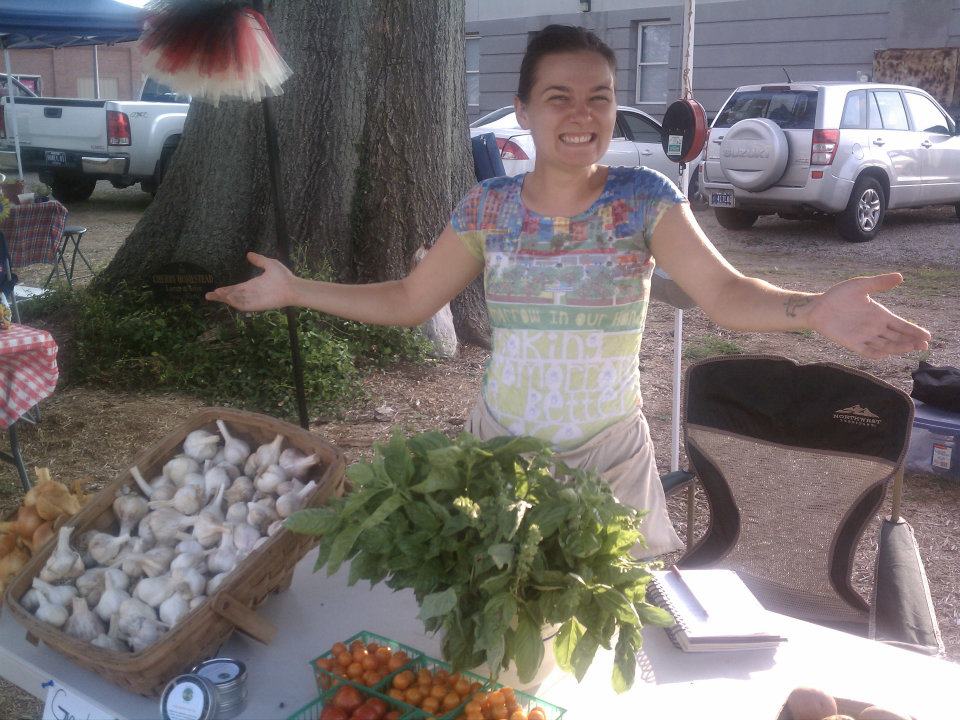
Former farmer days, 5 years ago, where room and board was the paycheck for hard work.
Summer of 2016 we made our first real trip purchase, tickets to Korea. We found a great deal on China Southern Airlines for $400 per person for the one way journey. It was 1/2 what we thought we would spend, so we felt it would be really foolish to turn it down. From there, we booked more flights and accommodations until the first six weeks were set up. By the end of July, we had all of expensive Asia booked and paid for, minus attractions and food. Pre-trip spending was around $4,000. Just because we spent it before the trip, while we had jobs, didn’t mean that we could increase our budget any, it just meant that we could pay for the trip with an inflow of cash versus strictly our savings.
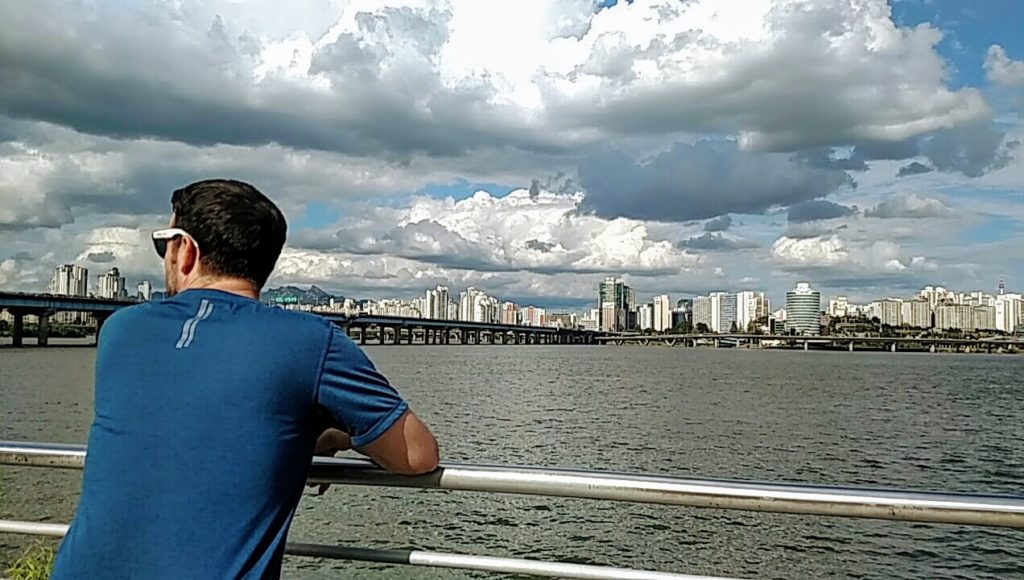
Korean park views for the cost of a subway ride.
New Year’s Day puts us at exactly 1/3rd of the way through our trip. Because of the way that our budget works we should actually have spent less than 1/3rd of our budget by this point. This is due to our plan to be in “cheap” Southeast Asia for another few months. Unfortunately, we are more than 1/3rd of the way through our budget. How did this happen? Basically, we didn’t think attractions and food would cost as much as they have; our mistake. We were fairly spot on with our accommodation estimates. Flights are a little more expensive than we bargained for, but not by an exorbitant amount. It’s just the day to day living that’s driving our costs higher than expected. Now, since we’re headed to very expensive Australia next, we have to be extra vigilant on our spending.
This is corn soup. It can’t be expensive, right?
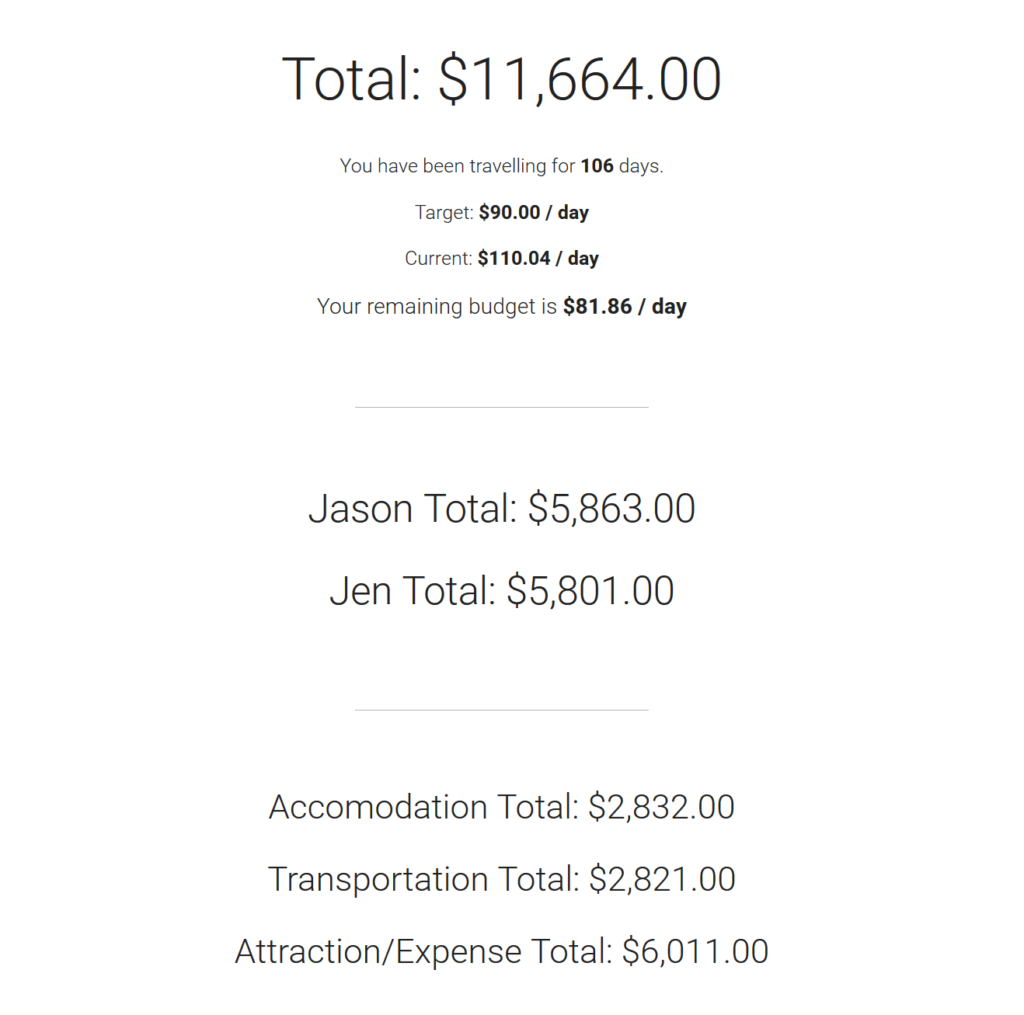
Below, you can see how we’ve arranged the budget. This is collective, not separate, so together we want to keep the spending at $90 per day throughout the entire trip, averaged out. Clearly, in very expensive cities like Tokyo, Singapore, and Rome, we’re going to go way over that so we need to compensate by going far below in the cheaper places. Right now in Kuching, we’re spending about $40 per day all in and we’re staying here for one month. Everyday here, before we do, eat, or drink anything, we are paying $20.50 for our hostel (at $16.50 per night) and the transportation to fly here ($4 per day on average). Today we had one meal out that cost $7 for the both of us. So, that means our total today was 27.50. Many days we spend more than that. Every ringgit/dollar counts. But, it’s cheap in Kuching! We love that, and that’s why we planned to stay here for so long. However, since we’re not just spending whatever we want whenever we want we are going to miss a few special attractions. C’est la vie.
Something to note is we’ve received some very generous monetary gifts from friends and family. We are extremely grateful for their goodwill, but we’re trying not to have that alter our 30K mark. As Jason has reminded me time and again, it’s nice to have extra money, but it shouldn’t affect how we spend day to day. Yes, sometimes we can do something extra special and attribute it to a gift, but we can’t just increase the budget. Again, I’m a spender, he’s a saver, so he’s being reasonable and I’m desiring excesses.
Once we make it to Europe we plan to visit several of the must see spots, but we also plan to work on farms or do other kinds of volunteering to both become part of the community in a that way a tourist can’t and to save money. Trading labor for housing and food is something I’ve done before and adore. I wish more of the world was set up like this. Europe has a greater number of opportunities for this than in the US, so if you’re thinking about long term travel I encourage you to consider this as a way to save money and really meet local people.
I’m not exactly sure what will happen in the next few months money wise. My mom asked me if we go over budget do we go home early? Probably not. We’d have to go pretty significantly over budget to do that. That said, when we get back our goal of buying a house and settling down is more important than this trip, so if that reality feels compromised we’ll definitely consider it. We talk about our spending on a daily basis, so this isn’t something we’re ignoring or doing without much though; it’s a balancing act.
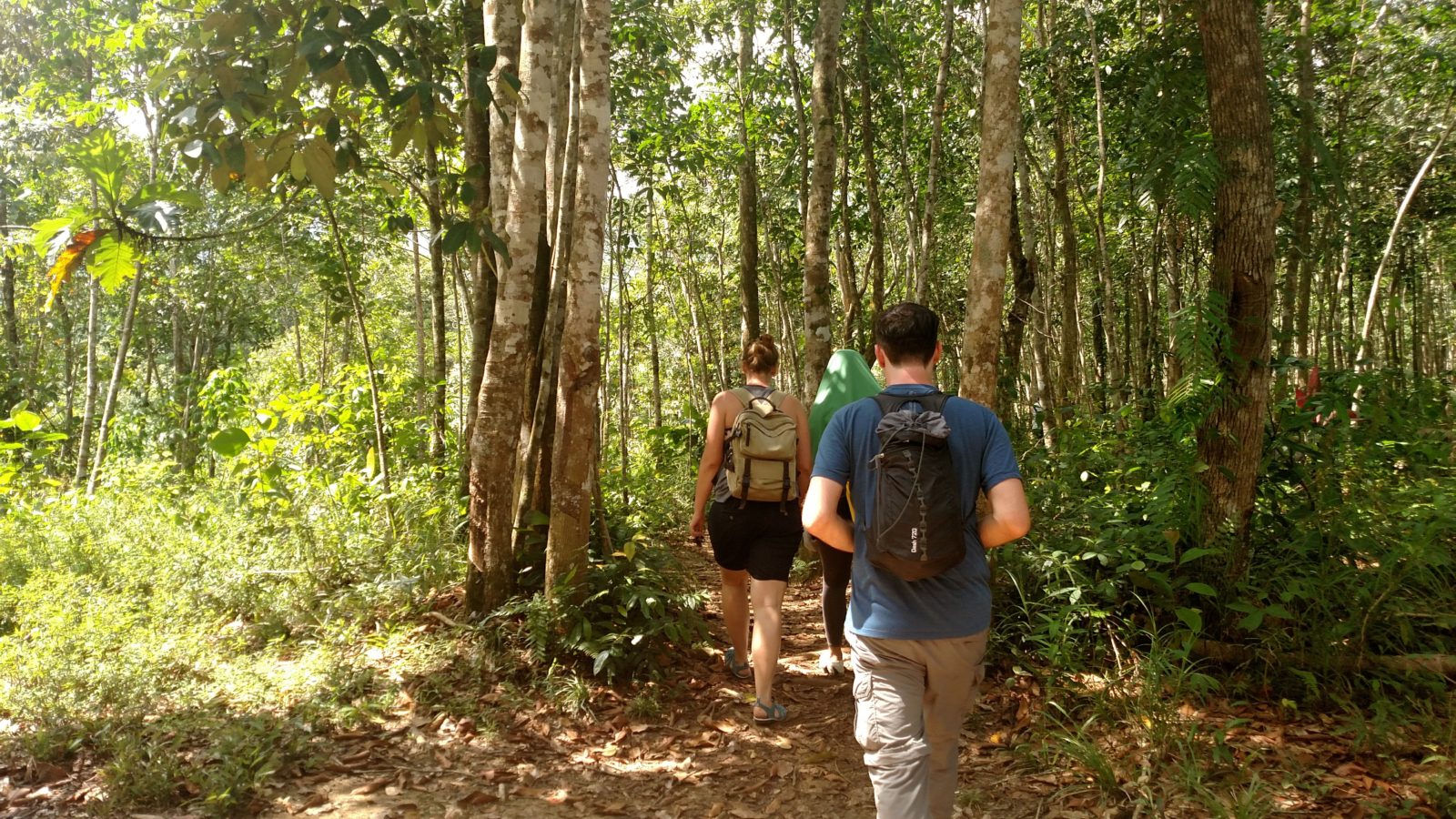
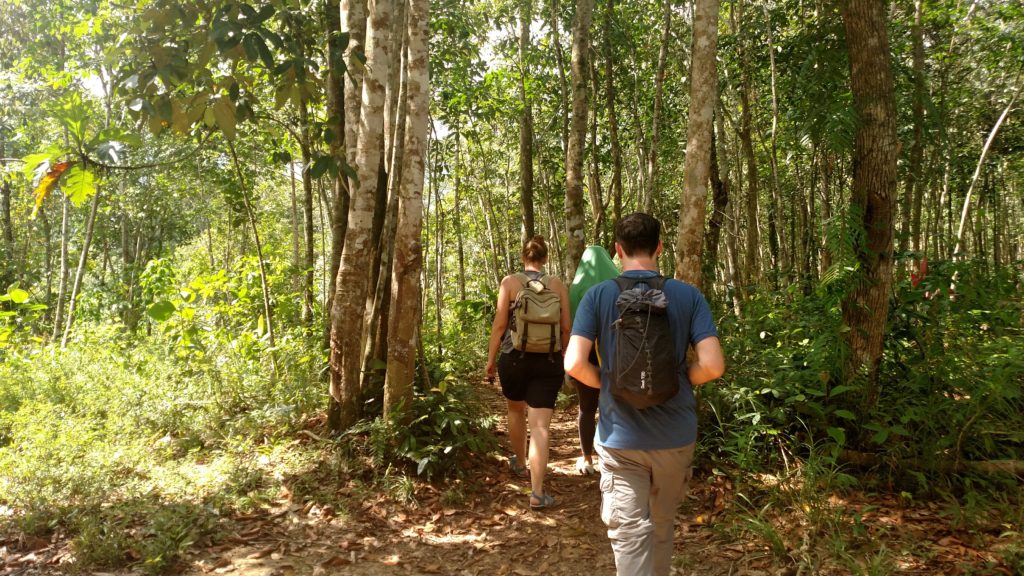
New friends took us jungle trekking. Only paid for the guide and snacks + made awesome new friends!
Next off topic-topic is packing! That post won’t nearly be as long, but it’ll certainly have more pictures! Thanks for tuning in. Until next time. Happy New Year!
It’s not all fun and games, this travel planning business. Before we figure out all the hotels and places to stay we need to get some dollars and sense in order around some difficult adult decisions. After losing my job I’ve been tasked as the primary individual in figuring out a few key parts to our adventure:
Which vaccines to get? How do you interpret a “recommended” from a “required” vaccine to know which you really need?
Where to get said vaccines?
Which travel insurance to get?
How does the Affordable Care Act work for travellers like ourselves? Do we need insurance in the US when we won’t even be here?
What about my car insurance? Keep or remove?
The further I go down this rabbit hole the more I realize there are no right answers to any of these questions. It’s not that there isn’t advice. Let’s start with vaccinations. There’s plenty advice, it’s that we don’t know what our best option really is. Spend over $1,000 on vaccines in the states prior to leaving? Spend about $40 in Bangkok when we get to an area that actually has the diseases, thus saving money but perhaps creating a medical disaster? Risk getting some, but not all, vaccinations (some are required, many just recommended)? Vaccinations can have serious side effects (limb paralysis that lasts for months is something I’ve heard of more than once), but the risks seem to be far fewer than the actual diseases that they can prevent. All of this on top of a twisted healthcare system in the US that 1. won’t pay for my vaccines via my insurance and 2. sends me to a “travel clinic” that is going to sell me a bill of goods that I can’t trust. I’m flustered by it all, to say the least.
Navigating the Affordable Care Act (Obamacare) is no better. The rule we’ve found is that if you’re out of the country 330 out of 365 days you’re exempt from health insurance. Our plan was to be out of the country for ~275 days, or over 9 months. Unfortunately, from the looks of it, we’d be paying a $1,200 penalty for opting out of insurance we won’t use or paying for insurance we can’t use. Due to the fact that I made a decent salary this year I’m damned if I do and damned if I don’t.
What would make this easier is if we could just use the international health insurance that we plan to get to cover our ACA needs. However, since the international insurance can’t meet all of the ACA requirements we can’t use it. So, we’re damned if we do and damned if we don’t. We are, by the way, getting the insurance, but it would be so much easier if we could just come back on our terms instead of Obamacare’s terms.
Lastly, my car. My precious car. I love her dearly, she’s been a trooper since 2008 and really treats me well. That said, it’s $362 for 6 months of insurance coverage for me not to drive it, or $724 per year. Since the ACA has determined I need to be out of the country for 11 months, this is basically the length of time I need to insure the care for without a presumed driver. Why keep it on the road? To make sure it doesn’t rot away. I’m not convinced that will happen. Now, the cost benefit analysis comes in of figuring out how much it will be in damages if I do nothing versus if someone drives it periodically. Again, how I don’t have a right answer here is that no one knows for sure what that cost would be. Could be a few hundred or a few thousand or nothing at all. It’s a gamble both ways.
We’re navigating these waters, like new sailors on a river we’ve never traversed before. We’re not even out to sea yet and it’s rocky. The purpose of this trip is to head toward paradise. I just hope we don’t sink before we get there.